The Designer’s Brain: How Fidelity Shapes Creativity and Collaboration
- Neuroscience
- UX research
- Design psychology
- Product design
- Creativity
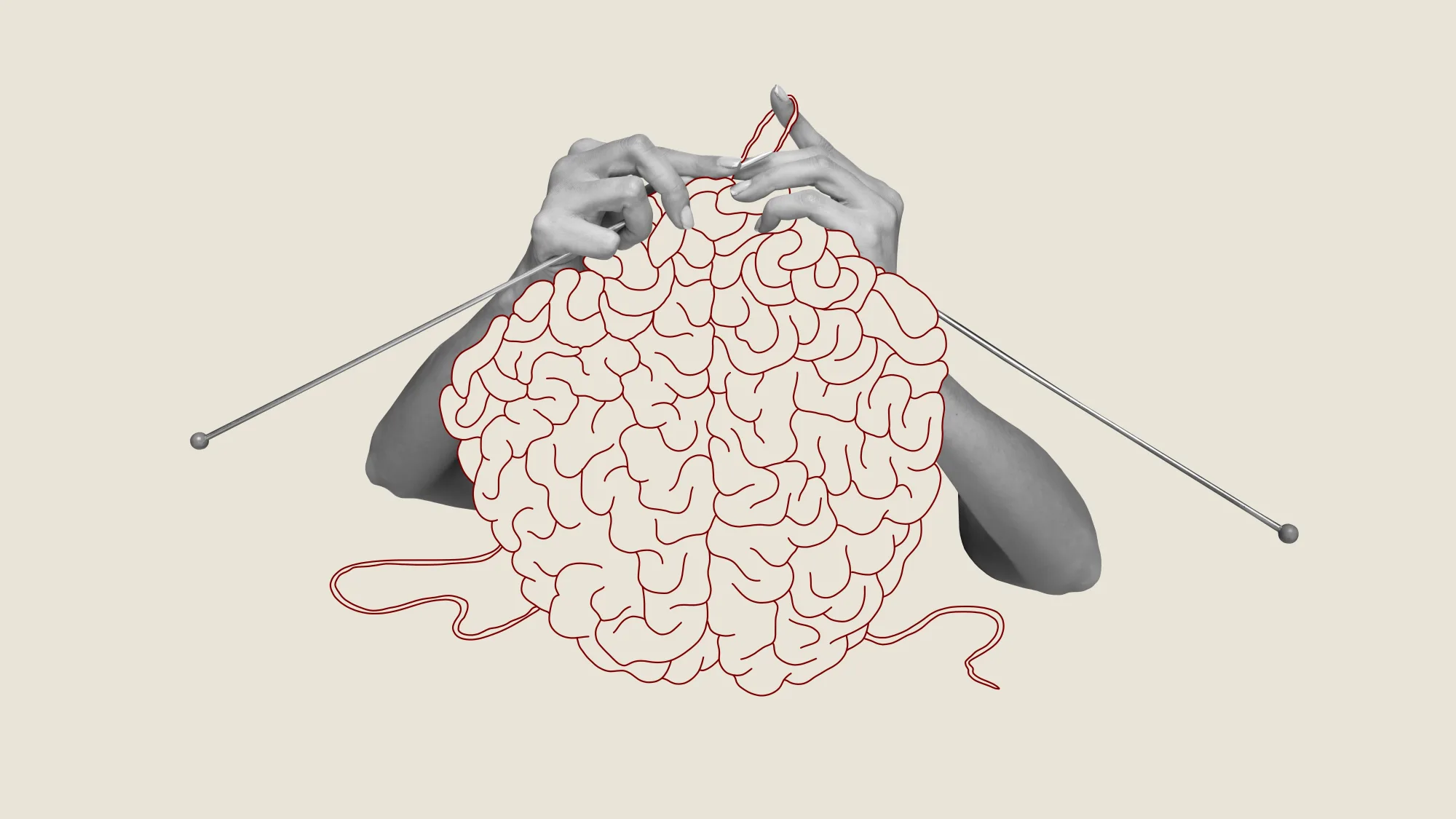
You’re probably pretty well aware of the different design fidelities. The level of detail changes how you think, how you feel, and how your team collaborates. When you sketch a rough idea for a product or interface, your brain behaves differently than when you polish it in Figma. Why is that? This question led me to explore what’s happening inside the brain, down to the level of neuroscience.
Why Fidelity Matters
Low-fidelity sketches and high-fidelity mockups activate different patterns of thought.
Rough sketches encourage imagination and exploration.
Polished prototypes encourage focus and evaluation.
This shift in cognitive mode explains why brainstorming feels open and energizing, while final reviews often feel decisive and constrained. Both are necessary — but not at the same time.
What it encourages
Structure before surface
Attention stays on structure, function, and user flow.
The Brain’s Two Creative Systems
Creative thinking depends on the balance between two major brain networks:
- Default Mode Network (DMN): supports imagination, memory, and associative thought.
- Executive Control Network: supports focus, planning, and critical evaluation.
Beaty et al. (2022) and Immordino-Yang (2021) found that creativity arises when the brain can switch flexibly between these systems. Low-fidelity sketches encourage this flexibility by keeping control loose. High-fidelity work tightens control and channels focus.
In practice, this means sketching helps teams stay open to ideas, while detailed mockups help them refine decisions.
Low-fi invites
collaboration; hi-fi
validates polish
How the Brain Sees Detail
The brain processes visuals extremely quickly through the occipital lobe.
But as fidelity increases, more analytical regions become active — especially the prefrontal cortex, which governs judgment and inhibition.
Simpler visuals, on the other hand, engage the default mode network and parietal cortex, which support imagination and association.
Neuroaesthetic studies (Zeki, 2020; Boccia et al., 2023) show that abstract or incomplete visuals activate broader brain connectivity. This is why early sketches often spark richer discussions and more collaborative thinking than finished designs.
Curiosity, Dopamine, and Exploration
The brain’s reward system plays a role too.
When people explore uncertain ideas, the mesolimbic system releases dopamine — the neurotransmitter linked to curiosity and motivation. Gruber and Ranganath (2021) found that this curiosity-driven state boosts activity in the hippocampus, improving memory and creative thinking.
Low-fidelity work sustains this exploratory state. As designs become more complete, uncertainty — and dopamine — decrease.
High fidelity signals closure, which can reduce curiosity and openness to new input. This shift often happens unconsciously.
The Hidden Cost of Detail
Working memory has strict limits. Most people can hold around seven items at once (Miller, 1956).
Working memory: about seven items
- Structure
- Function
- User flow
- Room to think
- Room to think
- Room to think
- Room to think
Doesn’t fit
Nothing left over.
3 of 7 slots used. Room left to think about the idea.
High-fidelity prototypes often exceed that capacity. The brain becomes overloaded with visual detail — colors, icons, spacing, text — leaving less room for higher-level reasoning.
Low-fidelity sketches reduce this load. They help teams concentrate on structure, function, and user flow instead of surface details.
Research on cognitive load (Sweller et al., 2022) confirms this effect: simplifying visuals preserves mental resources for analysis and synthesis.
When Beauty Distorts Judgment
The aesthetic–usability effect describes how people perceive attractive designs as more usable.
This bias arises because the amygdala and orbitofrontal cortex associate beauty with safety and reward. Pessoa (2021) calls this affective tagging: once a design is emotionally “liked,” later reasoning tends to confirm that preference.
For teams, this means that polished prototypes can create an illusion of correctness. Once something looks finished, it becomes harder to challenge its assumptions.
The brain
associates
time and
effort with
value
Designing in Sync with the Brain
Applying these insights can make design processes more adaptive and cognitively aligned:
- Start rough.
Sketch to activate imagination and support divergent thinking.
Keep early visuals simple and open. - Increase fidelity gradually.
Add detail only once the concept is clear.
This aligns with the brain’s transition from exploration to evaluation. - Manage cognitive load.
Avoid excessive visual detail early on. Use simplicity to focus thinking. - Use emotion strategically.
Save aesthetic refinement for later, when emotional engagement reinforces decisions instead of biasing them.
Design leaders at IDEO and Google’s Creative Lab emphasize this principle: fidelity is a lever for mindset.
Managing fidelity consciously helps teams move through the creative process in sync with how the brain works.
The Takeaway
Fidelity is more than a design choice, it changes how your brain works.
Rough sketches spark curiosity and get ideas flowing.
Polished designs sharpen focus and guide decisions.
Use fidelity deliberately and you can move your team between creativity and clarity with ease.
Next time you start a project, pick up a pen before opening Figma.
Don’t underestimate how that simple trick shapes the way you think and focus.